Good Girl Gone Bad
Play Good Girl Gone Bad
Good Girl Gone Bad Screenshots













Good Girl Gone Bad review
Explore the branching narrative, character development, and gameplay mechanics of this visual novel
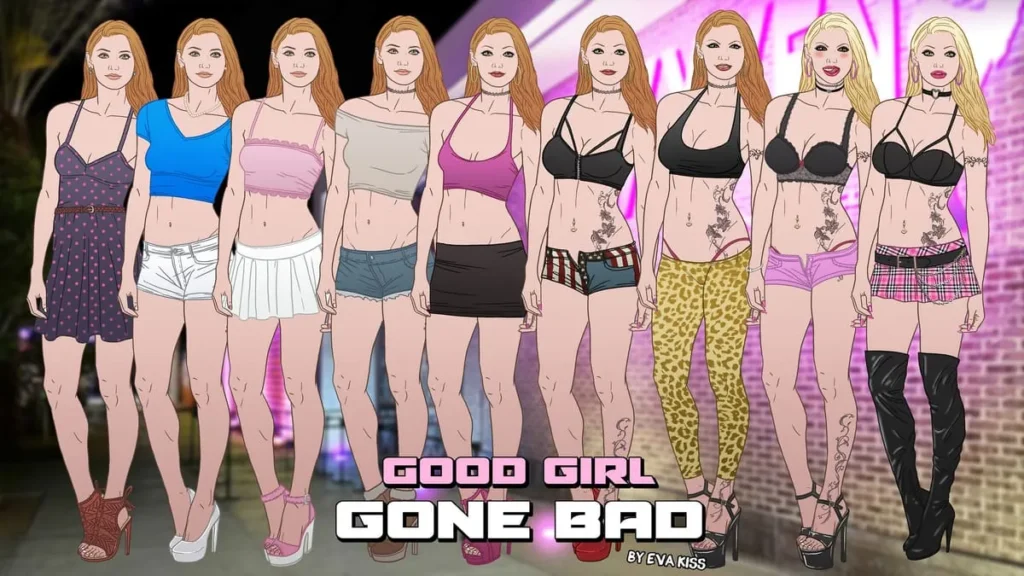
Good Girl Gone Bad is a visual novel developed by Eva Kiss that follows the life and adventures of Ashley Graham through a complex, branching narrative. This interactive fiction experience offers players significant freedom in shaping the protagonist’s journey through meaningful choices and consequences. The game features hand-crafted, hand-drawn artwork and deep character development that responds to player decisions. Whether you’re new to visual novels or a seasoned player, understanding the game’s mechanics, story structure, and character dynamics can enhance your overall experience. This guide provides everything you need to know about this narrative-driven adventure.
Understanding Good Girl Gone Bad: Game Overview and Core Mechanics
Ever feel like you’re just going through the motions in a story, watching events unfold on rails without any real say in the outcome? 🤔 I know I have. That’s why the first time I booted up Good Girl Gone Bad, I was genuinely stunned. This isn’t just a story you read; it’s a life you live, mistake by glorious mistake. Written by Eva Kiss, this visual novel throws you into the high heels of Ashley Graham, a young woman whose journey from predictable boredom to thrilling, chaotic freedom is entirely in your hands. Forget passive watching; here, every click is a commitment. This chapter is your deep dive into the machinery that makes this experience tick—the brilliant visual novel gameplay mechanics, the heart-stopping branching narrative choices, and the surprisingly deep character relationship system that together create a masterclass in interactive fiction storytelling. Buckle up; Ashley’s life is about to get complicated, and you’re the one driving. 🚗💨
What Makes This Visual Novel Unique?
At first glance, you might slot Good Girl Gone Bad into a certain category, but that would be a huge mistake. What sets it apart isn’t just its mature themes, but its unwavering dedication to player agency and artistic authenticity. While many games promise choice, this one delivers a cascade of consequences that genuinely reshape the world and the people in it.
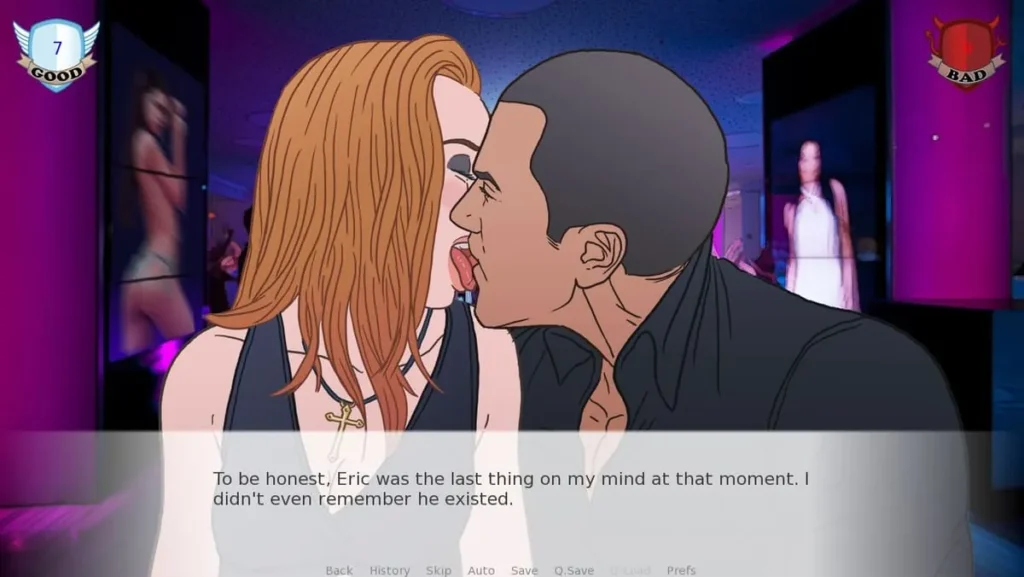
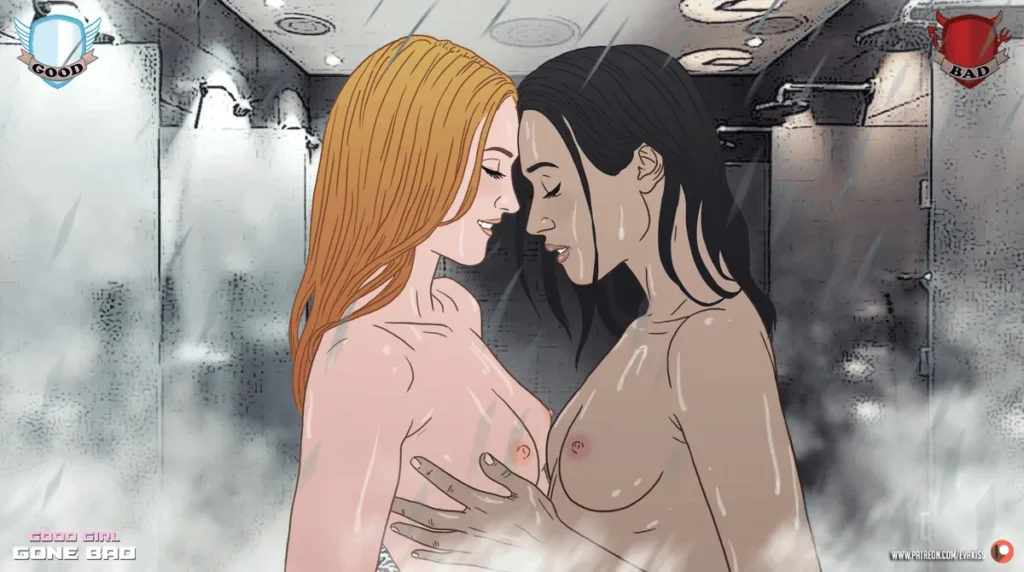
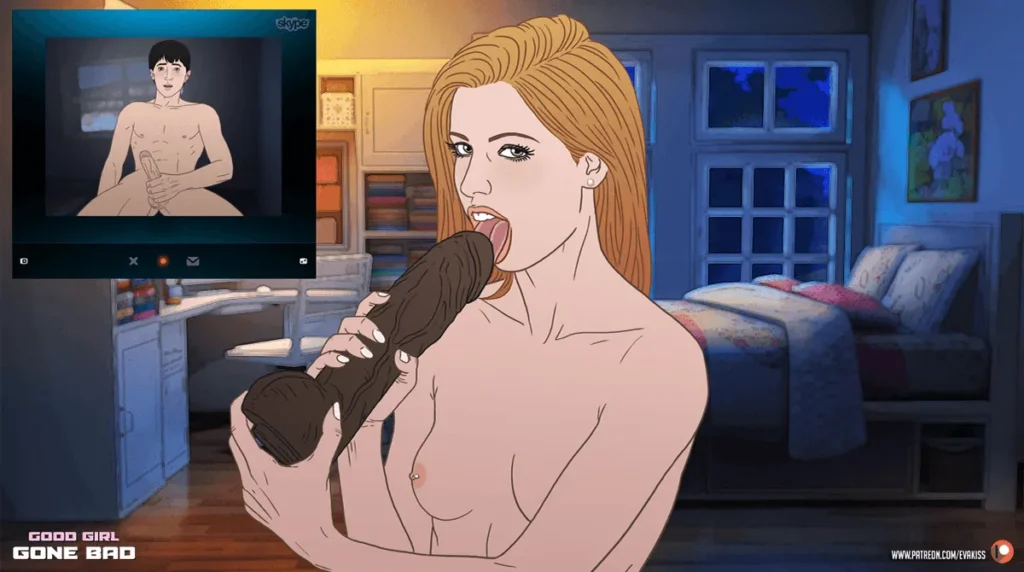
The most immediate standout is its stunning hand-drawn visual novel art. Every character, every location, every expressive sprite is crafted with a distinct, personal touch. This isn’t generic or assembled from asset packs; it’s art with personality. You can feel the artist’s hand in the lines, which makes the world of Ashley Graham feel tangible and alive. This artistic commitment extends to the characters’ reactions—a subtle eye roll, a mischievous smirk, a look of genuine hurt—all conveyed through the artwork, adding a powerful, wordless layer to the interactive fiction storytelling.
But the true genius lies in its narrative design. The game rejects the idea of a single “good” or “bad” path. Instead, it presents a sprawling web of possibilities. Your Ashley can be a cunning manipulator, a reluctant participant, a passionate explorer, or a chaotic blend of all three. The story’s coherency, no matter which path you take, is a testament to Eva Kiss’s writing. The branching narrative choices aren’t just about picking dialogue options; they’re about defining your Ashley’s core personality, her values, and her desires. This focus on visual novel character development from the inside out is what makes your playthrough feel uniquely, powerfully yours. It’s a game that respects your intelligence and isn’t afraid to let you fail, learn, and explore without moralizing judgment.
Gameplay Mechanics and Player Choice System
So, how does it all work? Let’s peel back the curtain on the visual novel gameplay mechanics that make this freedom possible. At its heart, the game is a series of decisions, both big and small. But these aren’t the illusion of choice you find in lesser titles; they are the primary engines of the plot.
The player choice system is beautifully transparent yet deeply complex. You are constantly presented with clear options that reflect different attitudes or actions. Will you study for the exam or go to the wild party? Will you tell the truth or craft a clever lie? Will you pursue a romantic connection or keep things purely physical? Each decision acts as a fork in the road, leading to entirely different scenes, character interactions, and future opportunities. This creates an unparalleled sense of player choice consequences. I remember on my second playthrough, choosing to be rude to a seemingly minor character early on. I didn’t think much of it until hours later, when I found a major storyline completely locked off because that character refused to vouch for me. The game has a long memory! 🧠
The mechanics are elegantly designed to support this web of possibilities:
- Branching Narrative Architecture: The story doesn’t branch like a simple tree but more like an intricate, interconnected river delta. Choices can loop back, create parallel story threads, or open up entirely new narrative continents.
- Stat & Trait Tracking (Hidden & Visible): Your actions silently build Ashley’s reputation and personality traits (like “Confidence,” “Submissiveness,” or “Cunning”). These stats unlock or lock certain dialogue and paths later, making your playthrough mechanically unique.
- Mini-Games & Skill Checks: Occasionally, the narrative integrates small interactive challenges, like a dancing mini-game or a persuasion attempt. These aren’t just filler; they are active tests of the traits you’ve developed, providing another layer of interactive fiction storytelling.
- The “Rewind” Feature: Acknowledging the sheer volume of branching narrative choices, the game includes a timeline feature. This allows you to jump back to key decision points without restarting the whole game, encouraging experimentation and exploration of all the juicy “what if” scenarios.
Pro Tip: Don’t save-scum constantly! Part of the magic is living with your mistakes and seeing where the unexpected path leads. Some of the most memorable and human moments in the game come from unintended consequences. 😉
This entire structure empowers you with incredible freedom. Want to focus on a single romantic partner? You can. Want to burn every bridge and embrace chaos? Go for it. The visual novel gameplay mechanics exist to serve your story, not the other way around.
Character Development and Relationship Dynamics
If the choice system is the skeleton of Good Girl Gone Bad, then its characters are the beating heart. The character relationship system here is a masterpiece of cause and effect, where every interaction leaves a mark. This isn’t about filling a love meter from 0 to 100; it’s about navigating nuanced, often messy, human connections.
Visual novel character development is handled with remarkable depth. Each major character has their own fully realized arc, desires, and moral compass. They don’t exist solely for Ashley’s benefit; they have their own lives that your choices can disrupt, support, or destroy. Your Ashley’s actions directly shape how they view her and, crucially, how they behave. Be kind and supportive, and a character might become a loyal confidante. Act selfishly or manipulatively, and you’ll breed resentment or turn them into a rival. The player choice consequences are most palpable in these relationships—a thoughtless lie can shatter trust, while a moment of vulnerability can forge an unbreakable bond.
The variety is astounding. You have characters who are sweet and traditional, others who are wildly hedonistic, and some who are dangerously manipulative. They all respond to the Ashley you create. A submissive Ashley will trigger different dynamics than a dominant one. The game expertly explores how branching narrative choices in dialogue and action fundamentally alter your social landscape. I was blown away when, after playing as a “people-pleaser,” I replayed as a more assertive Ashley and watched the same characters respond with completely different dialogue, offering new story threads I never knew existed.
To help you navigate this social minefield, here’s a breakdown of some core character archetypes and how the character relationship system plays out with them:
| Character Archetype | Key Relationship Mechanics | How Player Choices Affect Them |
|---|---|---|
| The Childhood Friend / Stable Partner | Built on history and trust. Paths focus on emotional intimacy, commitment, and potentially breaking from tradition. | Choices involving loyalty, honesty, and future planning are critical. Neglect or infidelity can permanently damage this relationship. |
| The Wild Card / Hedonist | Centered on freedom, experimentation, and living in the moment. Less about deep emotional strings, more about shared experiences. | Your willingness to take risks and embrace chaos fuels this bond. Prudent or moralizing choices will cause them to lose interest. |
| The Authority Figure / Mentor | Power dynamics are key. Relationships can be based on respect, rebellion, manipulation, or a blend of all three. | Choices that demonstrate competence, cunning, or submission alter your standing. Can open doors to advanced opportunities or severe repercussions. |
| The Rival / Foil | Interaction is defined by competition and conflict. Can evolve into bitter enmity, grudging respect, or even heated romance. | Aggressive or defiant choices escalate the rivalry. Strategic humility or clever alliances can turn an enemy into a reluctant ally (or more). |
Ultimately, the game’s greatest achievement is making you care about these connections. You’re not just checking off boxes on a romance roster; you’re managing a fragile ecosystem of personalities. The hand-drawn visual novel art brings these characters to life with expressive detail, making every reaction feel earned and personal. Whether you’re seeking love, power, friendship, or just a good time, the character relationship system in Good Girl Gone Bad ensures that every connection you make—or break—resonates throughout your entire journey, making your story truly one-of-a-kind. Remember, in this world, you aren’t just making choices for Ashley; you’re choosing who she becomes to everyone around her. ✨
Good Girl Gone Bad stands out as a visual novel that prioritizes player agency and meaningful storytelling through its complex branching narrative system. The game’s combination of hand-crafted artwork, deep character development, and consequence-driven gameplay creates an engaging experience for players seeking interactive fiction with genuine replay value. Whether you’re drawn to the character-driven narrative, the variety of relationship paths, or the freedom to shape Ashley Graham’s journey through your choices, this visual novel offers a rich experience that rewards exploration and experimentation. Understanding the game’s mechanics and story structure allows you to make more informed decisions and discover the multiple paths and endings the game has to offer. Start your journey with Good Girl Gone Bad and experience how your choices truly matter in shaping the narrative.